
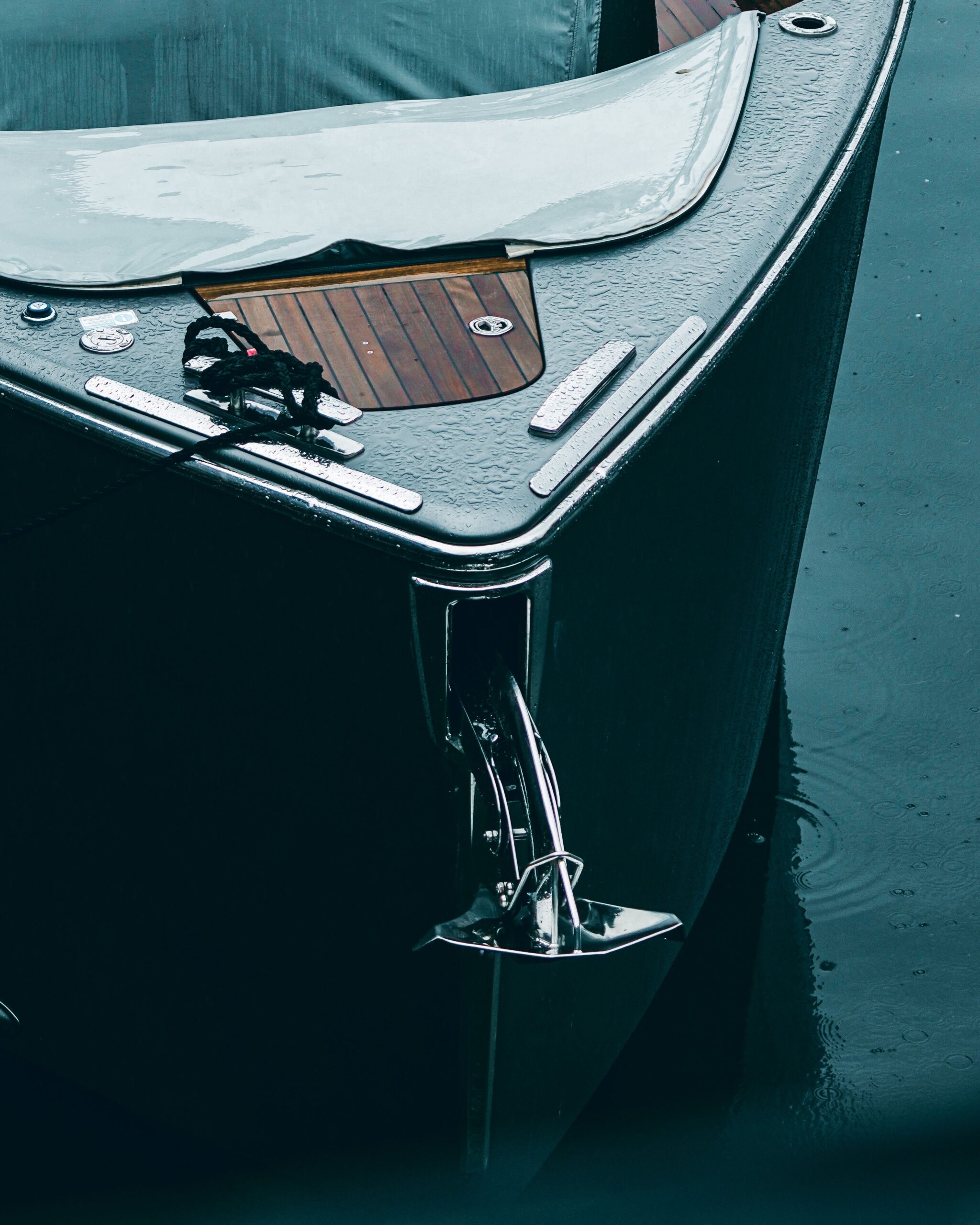
How to Choose the Right Anchor for your Boat

How to Choose the Right Anchor for Your Boat
How to Choose the Right Anchor for Your Boat
A quiet night at anchor is one of the great pleasures of boating. But that sense of freedom depends on something largely hidden beneath the surface: an anchoring system you can trust.
Choosing an anchor is not simply a matter of matching its weight to the length of your boat. Hull type, displacement, windage, seabed and expected weather all influence how well an anchor will perform. The anchor is also only one part of the system. Chain, rope, shackles, swivels, windlass and deck fittings must work together.
Here are the essential points to consider before choosing your next anchor.
1. Start with the boat—not just its length
Boat length is a useful starting point, but it does not tell the whole story. Two boats of equal length can place very different loads on their anchors.
Consider:
- The boat’s fully loaded displacement
- Hull type: motor yacht, sailing yacht or multihull
- Freeboard and superstructure
- Windage created by canopies, flybridges and deck equipment
- Typical cruising conditions
- Whether the anchor will be used mainly for daytime stops or overnight stays
A high-sided motor yacht or multihull may create considerably more wind load than a lower-profile boat of similar length. When your boat falls between two sizes in a manufacturer’s selection chart, moving up one size can provide a useful additional margin—provided the anchor still fits the bow roller and can be handled safely by the windlass.
Always check the anchor manufacturer’s sizing table for your particular boat and intended use.
2. Think about where you normally anchor
An anchor that performs well in sand may behave differently in soft mud, weed or rocky ground. If you cruise through different regions, you need a versatile primary anchor and, ideally, a second anchor suited to alternative conditions.
Sand
Firm sand generally offers good holding conditions. Modern scoop-style anchors are designed to penetrate quickly and develop strong holding power in this type of seabed.
Mud
Soft mud can require an anchor with a larger surface area and good penetration. In very soft mud, an anchor may need more time and distance to set securely.
Weed
Dense weed can prevent the anchor from reaching the seabed. A sharp anchor profile and careful setting technique are particularly important. If possible, use clear water and daylight to find a sandy patch.
Rock
Rocky bottoms are unpredictable. An anchor can become trapped rather than properly set. Avoid anchoring where recovery may be difficult and check local charts and restrictions before dropping the anchor.
No single anchor is perfect in every condition. Your usual cruising ground should therefore influence the final choice.
3. Select the right anchor design
Common anchor families include:
- Modern scoop anchors: Designed to set quickly and offer strong all-round performance in sand and mud.
- Plough-style anchors: Widely used for cruising and compatible with many bow rollers.
- Fluke anchors: Lightweight and effective in suitable sand or mud, but less versatile in weed or rocky areas.
- Claw-style anchors: Easy to handle and often fits bow arrangements well, although holding performance varies by size and seabed.
Rather than choosing by appearance alone, compare independent performance information, manufacturer recommendations and compatibility with your boat.
The best anchor is not necessarily the largest one you can carry. It is the one that sets reliably, suits your cruising environment and works correctly with the entire anchoring system.
4. Do not overlook the chain and rope
An anchor cannot perform properly without an appropriate rode—the connection between the anchor and the boat.
Chain adds weight near the seabed, resists abrasion and helps keep the pull on the anchor closer to horizontal. Some boats use an all-chain system, while smaller boats may use a combination of chain and rope.
Check that:
- Chain size matches the windlass gypsy
- Rope and chain are suitable for the boat’s displacement
- Shackles and swivels have appropriate working-load ratings
- Connections are properly secured and inspected
- The bitter end can be released safely in an emergency
- A snubber or bridle is available when appropriate
For multihulls, a correctly arranged bridle can distribute the load and reduce shock and movement at anchor.
5. Allow enough scope
Scope is the relationship between the length of rode deployed and the vertical distance from the bow roller to the seabed—not simply the depth shown on the sounder.
More scope generally improves holding because it creates a flatter pull on the anchor. The amount required depends on the anchoring system, depth, available swinging room, wind, waves and expected weather.
Do not rely on one ratio for every situation. Use the equipment manufacturer’s instructions and recognised seamanship guidance. Increase scope when conditions deteriorate, while ensuring that the boat has enough room to swing without approaching other vessels, hazards or the shore.
6. Make sure the system fits your boat
Before buying an anchor, confirm:
- It sits correctly on the bow roller
- The tip cannot damage the hull
- The shank passes through the bow arrangement
- The anchor can self-launch and retrieve, if required
- The windlass is suitable for the combined load
- The chain fits the gypsy exactly
- The chain locker has sufficient depth for reliable feeding
- The anchor can be secured independently while underway
A technically suitable anchor may still be the wrong choice if it does not fit or deploy correctly from your bow.
7. Test the anchor—do not simply drop it
A good anchoring routine matters as much as good equipment.
Lower the anchor under control, allow the boat to move back while paying out the rode and then apply progressively increasing reverse power to set it. Use fixed points ashore, the chartplotter and an anchor alarm to check whether the boat is holding position.
Before settling in, consider:
- Changes in wind direction
- Tidal range and current
- Your swinging circle
- Nearby boats and their different rode arrangements
- Forecast conditions during the entire stay
- An escape plan if the anchorage becomes unsafe
Never assume the anchor is secure merely because the boat has stopped moving.
A complete system inspires confidence
Choosing the right anchor is about more than kilograms and boat length. It means understanding your boat, your cruising area and the conditions you may encounter.
A well-matched anchor, reliable chain, correctly sized connections and careful anchoring technique work together. When each part of the system has been chosen thoughtfully, you can enjoy the anchorage with much greater confidence.
Safety note: This article provides general information and does not replace the instructions of your boat, anchor or windlass manufacturer, professional training, or local navigation requirements.